The call trainer that answered the AI question
An agency that sells calls for a living needed an answer it could show. We built one out of their own recordings.
A founder-owned demand-gen agency in the Midwest, about 25 people. Their product is outbound: 8 reps dialing for B2B clients, a few hundred dials a day, every new hire ramped by shadowing the same 2 senior closers. At a quarterly review, their largest account asked the question that now sits in every agency’s meetings: “what are you guys doing with AI?” The client wasn’t auditing. They wanted to be impressed. The owner improvised an answer about a pilot that didn’t exist yet, and heard how it sounded.
Before
An agency that sells calls should have been the easy case for AI. Instead it looked like most shops: seats bought for everyone the year before, used by 3 people. A folder of call recordings nobody had time to mine. “We’ve been dabbling” as the standing answer, which is true of almost everyone and impressive to no one.
Coaching ran on the manager’s Friday afternoons: sample a handful of recordings, write notes, deliver feedback days after the calls it described. Ramp ran on the 2 closers’ calendars, because a new rep learned the job by shadowing, and growth queued behind the 2 people least available to teach. Meanwhile the AI question kept arriving, because their clients’ own boards were asking it one level up. The agency needed an answer it could show, not describe. Nothing they’d bought produced one.
What was done
We didn’t start with a model. We started with their recordings and the sales manager’s grading habits: what actually moved a call to a next step in their book. The openers, the brush-off recoveries, the price grind, the ask. The counterintuitive move was leaving sales methodology out of it. We didn’t teach the AI a system. We transcribed theirs.
The first working practice call ran the same day as kickoff: a rep talking to an AI playing a skeptical ops director who wanted off the phone. The prototype was the spec. The reps’ complaints became the next build: too polite, never interrupts, gives up the meeting too easily. Each pass made the buyer meaner and truer.
Practice mode grew into a roster of buyer personas: the brush-off, the price-grinder, the happy-with-incumbent, the one who goes silent.
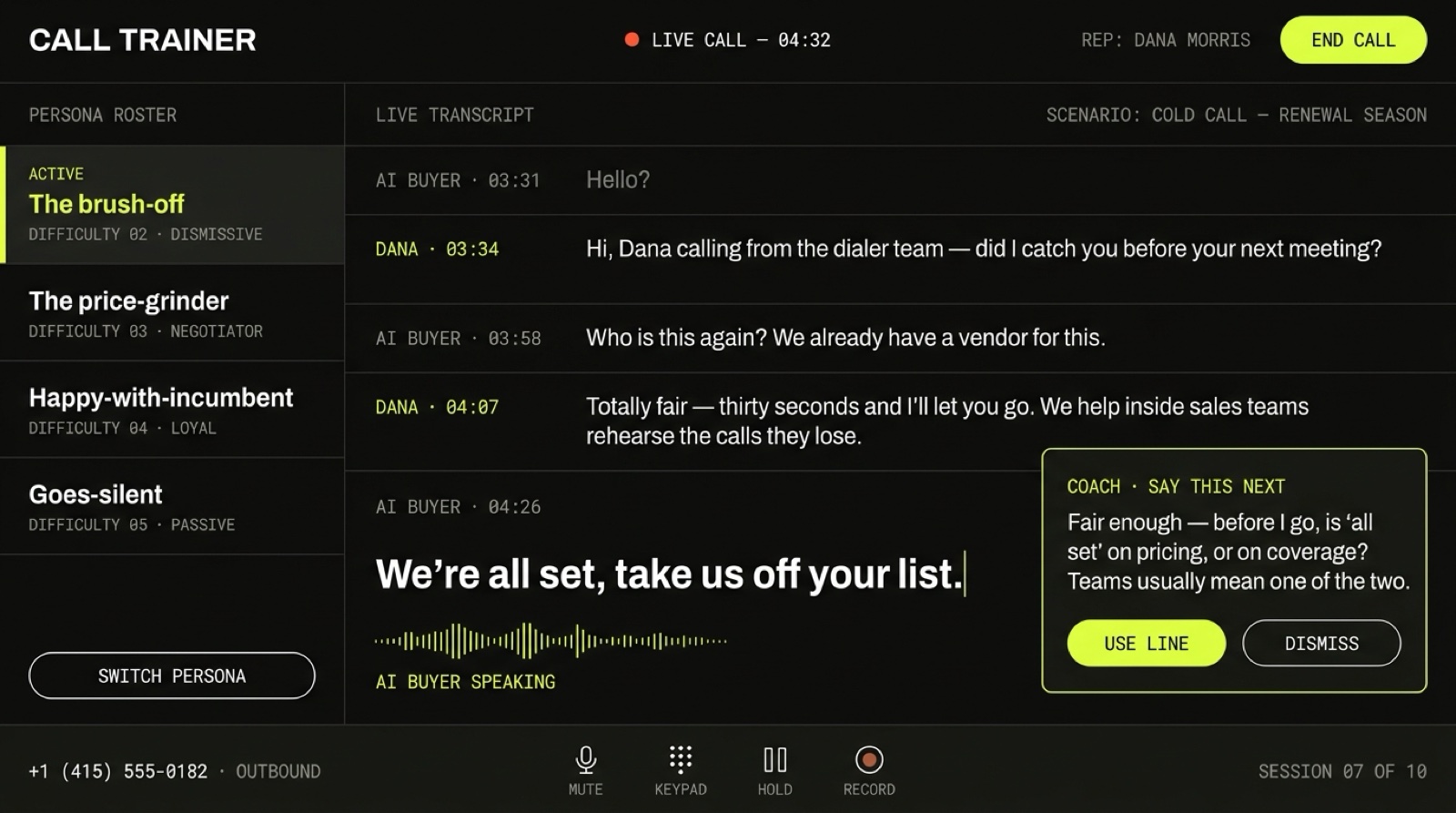
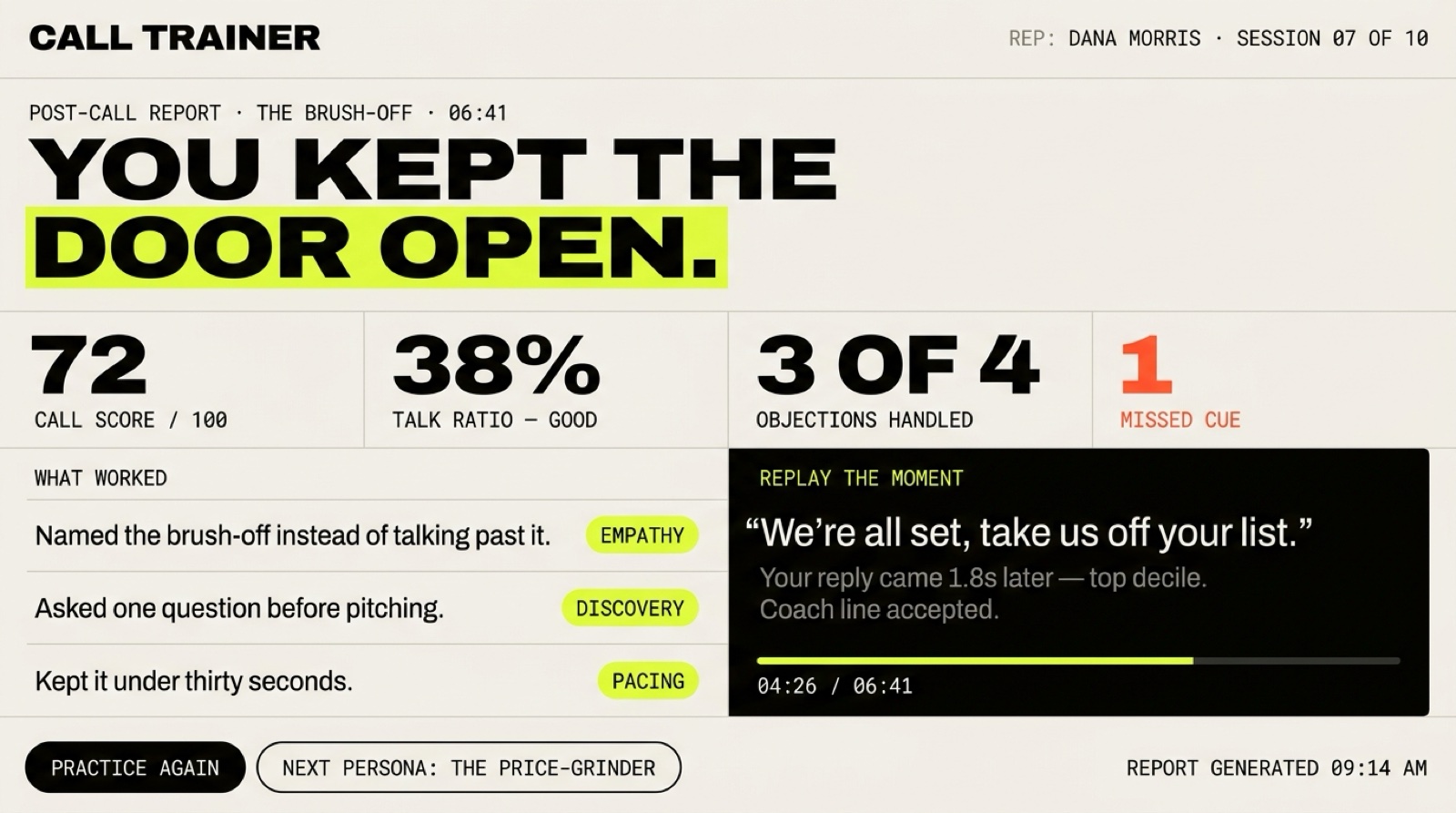
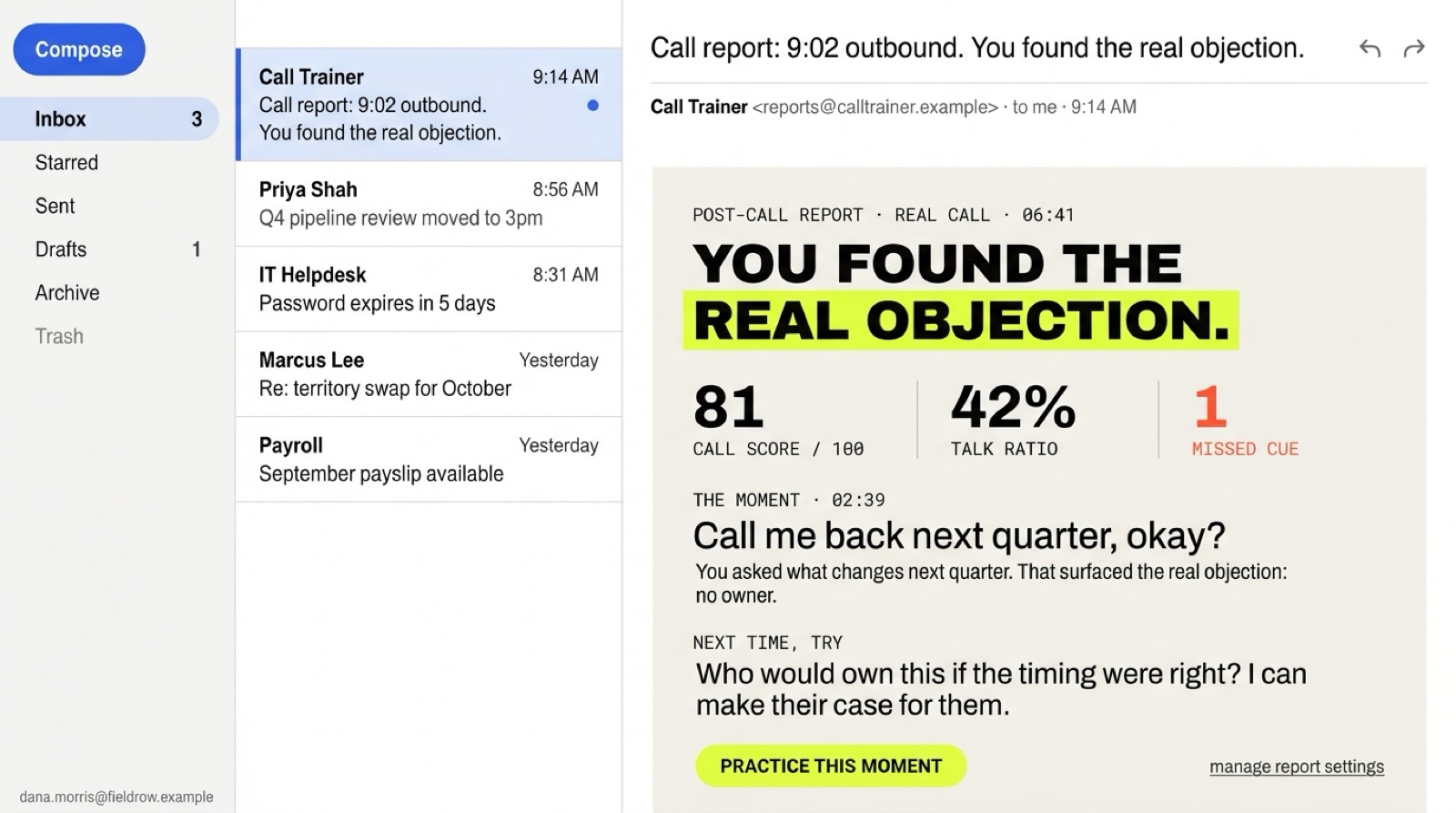
Coaching happens during the drill, not after it. The moment the call ends, the rep gets a report scored against the shop’s own talk tracks, with the timestamped moment the call turned.
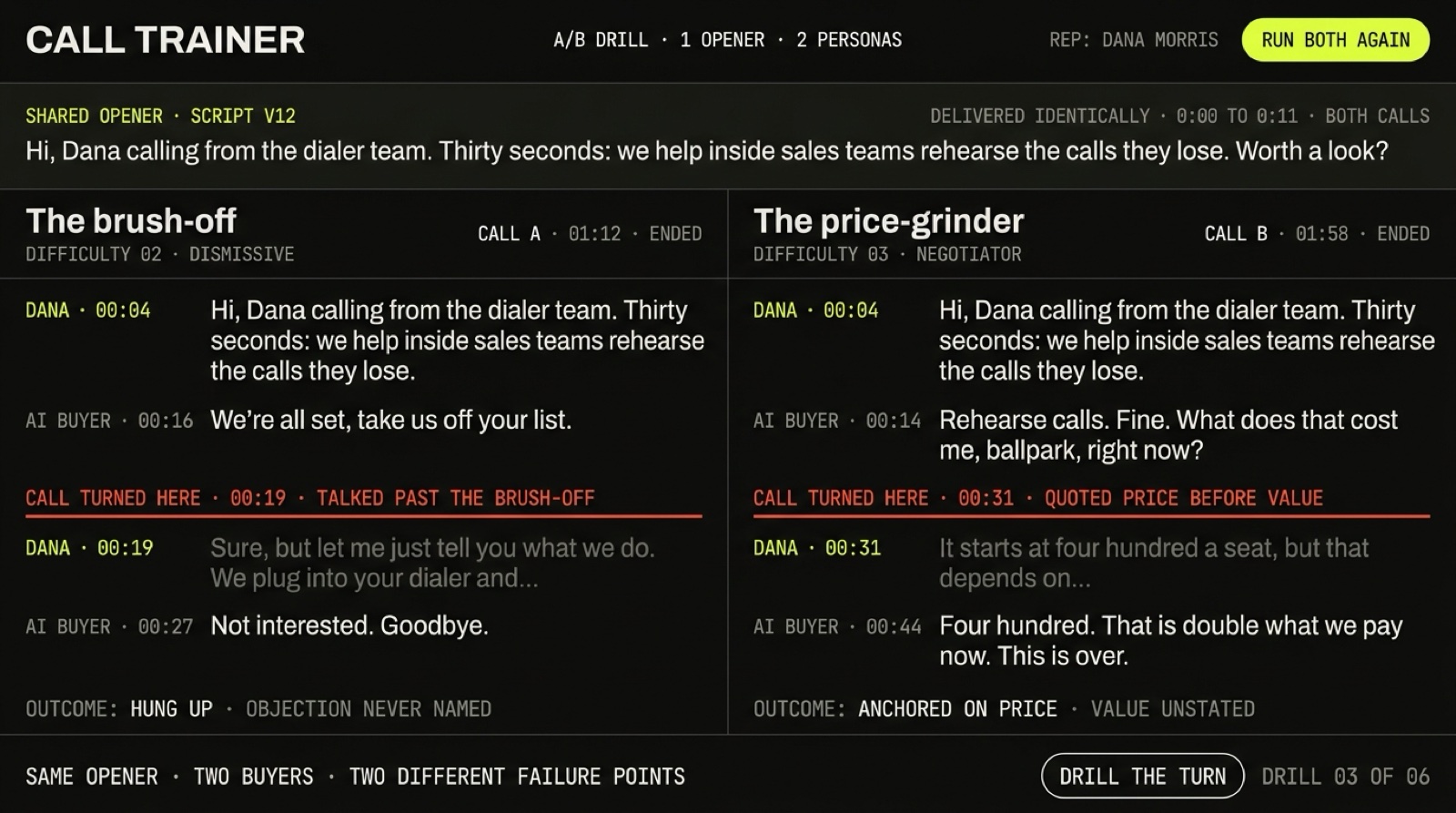
The same opener plays out differently against different buyers, which is the point of drilling.
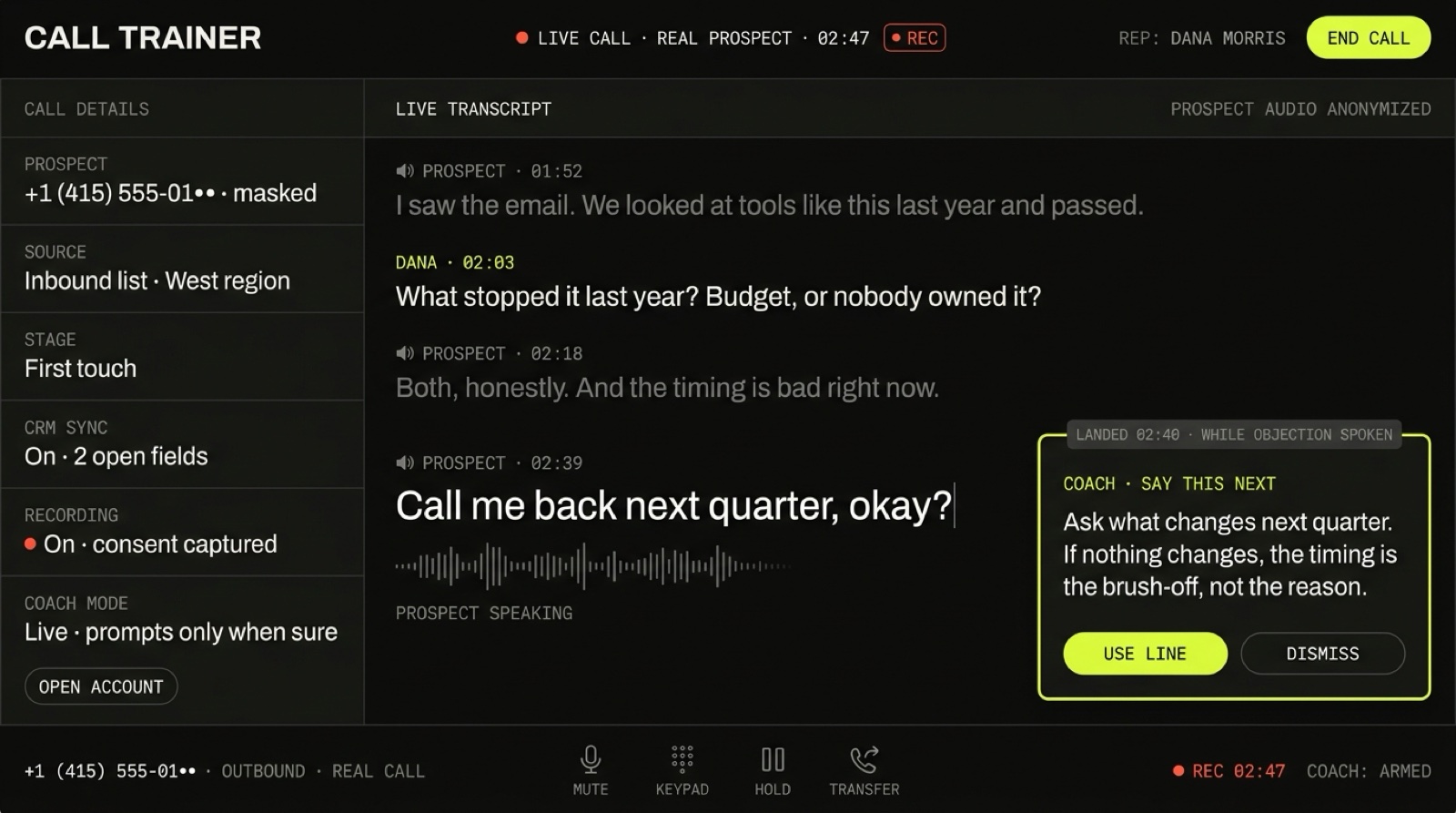
When the drills stopped being hard, the same coaching engine moved onto real calls: live prompts while the prospect talks, and a post-call report on every conversation.
Then the script stopped being a document. The shop’s script was what most agency scripts are: written by the sales manager years ago, updated never. The trainer’s script rebuilds itself from the calls. Every disposition feeds it, what turned a conversation and what killed one, and the objection handlers that actually worked get written in while the ones that stopped working age out.
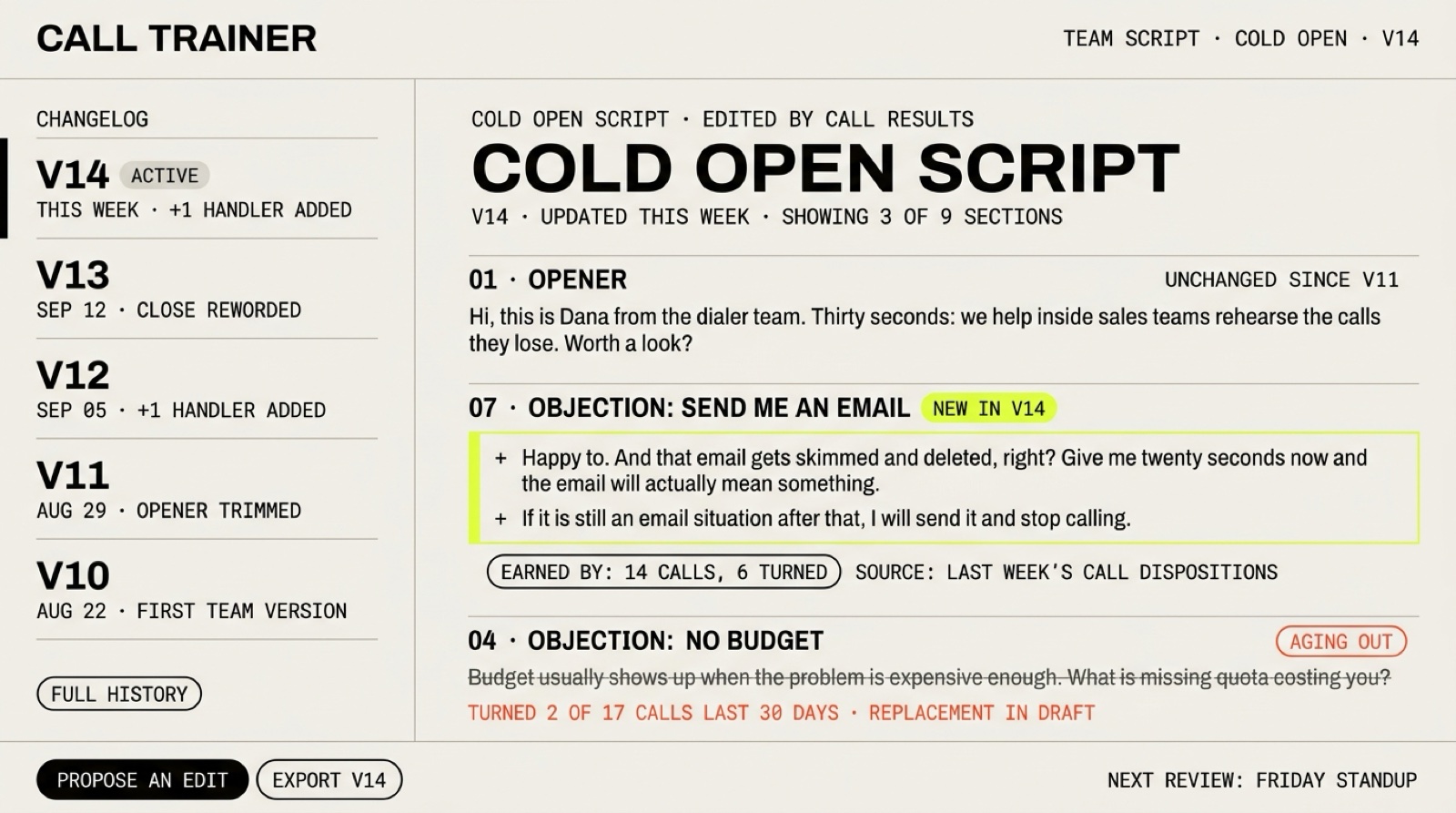
A new hire drills on what worked last week, not on what worked when the script was written.
The wobble
The part that nearly killed it came early, and it wasn’t the model. Practice mode launched as a destination, a separate app reps were supposed to open between call blocks. Week 1 was novelty. Week 2 was the truth: the only people drilling were the 2 closers who needed it least, the same curve as the seats the year before. We’ve built destination tools and watched exactly this happen. The fix wasn’t a feature; it was placement. Practice moved inside the dialer the reps already lived in and took a standing slot in the call blocks. Reports went to the rep first, not the manager. The owner put usage on the Monday agenda and kept it there. Adoption stopped being a request.
After
Before the trainer graded any rep, we graded the trainer. We ran its scores against the sales manager’s own blind grading on a held-out set of the shop’s real recordings, and tuned it until the manager stopped disagreeing with it. The manager had to trust the report before anyone else would.
The Friday recording reviews stopped. Feedback that used to arrive days later now lands before the next dial, in the inbox the rep already watches.
A new hire’s first week runs against the brush-off persona before their first live dial, and the 2 closers’ calendars stopped being the training department. The manager coaches from reports instead of memory, and the Friday review became a shorter Monday conversation about the calls that actually turned. The script the new hire learns from is younger than their start date.
The AI question changed shape too. At the next review the owner didn’t describe anything. They shared a screen: a rep mid-drill, the coaching prompt appearing on cue. And about a year after practice mode shipped, we watched several companies launch the same frameworks as commercial products: persona roleplay, live call coaching, post-call scoring. The agency had been running them for a year. Being a year early wasn’t the goal. It’s what having your own answer looks like from the outside.
What it required
The owner sat in the weekly check-in, every week, from kickoff on. Not a delegate. The sales manager gave up the rubric: hours unpacking what they actually graded calls on, and handing over the worst recordings, not the best ones. There was one uncomfortable conversation, and it wasn’t about jobs. It was about what the coaching role becomes when scoring is automatic: the manager stopped being the person who listens to recordings and became the person who decides what good sounds like. And the reps had to let the AI hear everything, including the calls they’d rather bury. That took the owner saying, in the room, that the reports belong to the reps first. It held because they meant it.