The brand system that moved into the client’s ChatGPT
Her clients were already designing in ChatGPT. Now they design in her brand, inside the tool they were already using.
A design-only studio in the Northeast, about a decade old: 12 designers, no engineers, and no intention of hiring one. She owns it, and her clients’ brands live in her building: identity systems, packaging, deck templates, and campaign kits, for consumer labels and a few regional institutions.
Two things were happening to her at once, and neither had a name yet. Past clients kept emailing for assets they’d paid for years ago. Current clients had started designing in ChatGPT and sending her the results.
Before
The past-client problem showed up as a hiring decision. “Send me the logo.” “Where’s that deck template from the spring campaign?” “Do you still have the dielines?” Dozens of finished relationships, every one entitled to its own files, every request pulling a designer off billable work. It got loud enough that she hired admin help, and the honest description of that job, once you looked at a week of it, was hunting down assets. Just under 20 hours of it a week.
She already had a digital asset management system, and it worked exactly as sold: every file tagged, versioned, searchable by the people inside the studio. The people asking were not inside the studio.
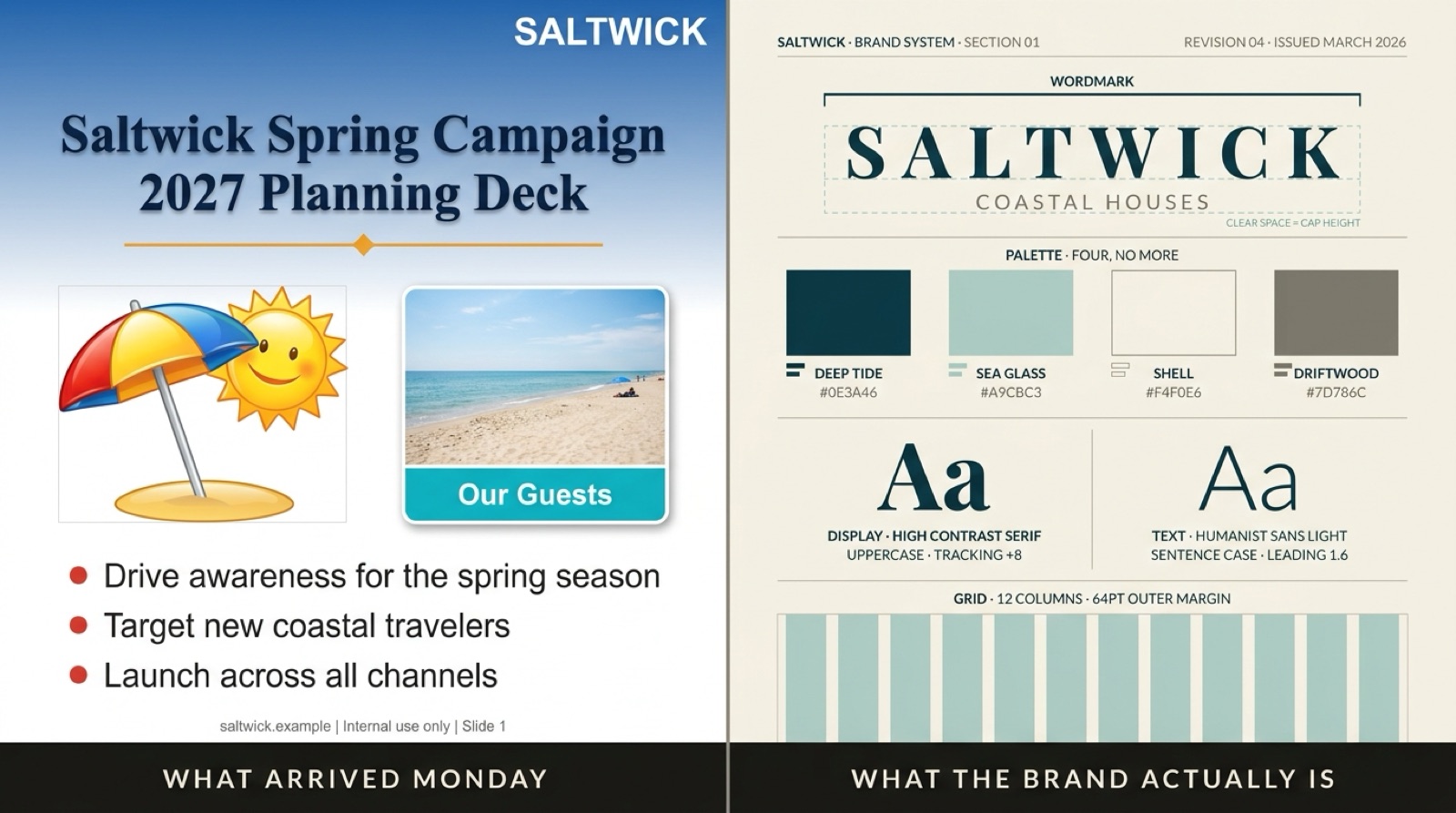
The current-client problem was newer and worse. Her clients had figured out they could ideate on their own, so they did. A marketing manager would spend an evening with ChatGPT and arrive Monday with a deck: their product, their words, somebody else’s typeface, a palette from nowhere, a layout breaking every rule in a brand system the studio spent months building. The studio’s job quietly became cleanup on work that started off-brand.
Her clients were already designing in ChatGPT. She just wasn’t in the room.
What was done
We didn’t build her a portal. That was the first decision and the one that mattered: a portal is a second place for a client not to go, and she already owned the first one. Her asset system wasn’t failing. It was unreachable from where the asking happened.
The asking happened in ChatGPT and Claude. So that’s where we put the studio.
We built an MCP server on top of her digital asset management system. MCP is the standard that lets an AI assistant reach into an outside system and do real things there, so the plain version is this: we gave her asset library hands inside the tools her clients already had open. Nothing for her team to install, nothing new for her clients to learn.
Retrieval came first, because it was the loud problem. A client asks for the logo in the thread they’re already sitting in and gets the right lockup in the right format, out of the same library her designers use.
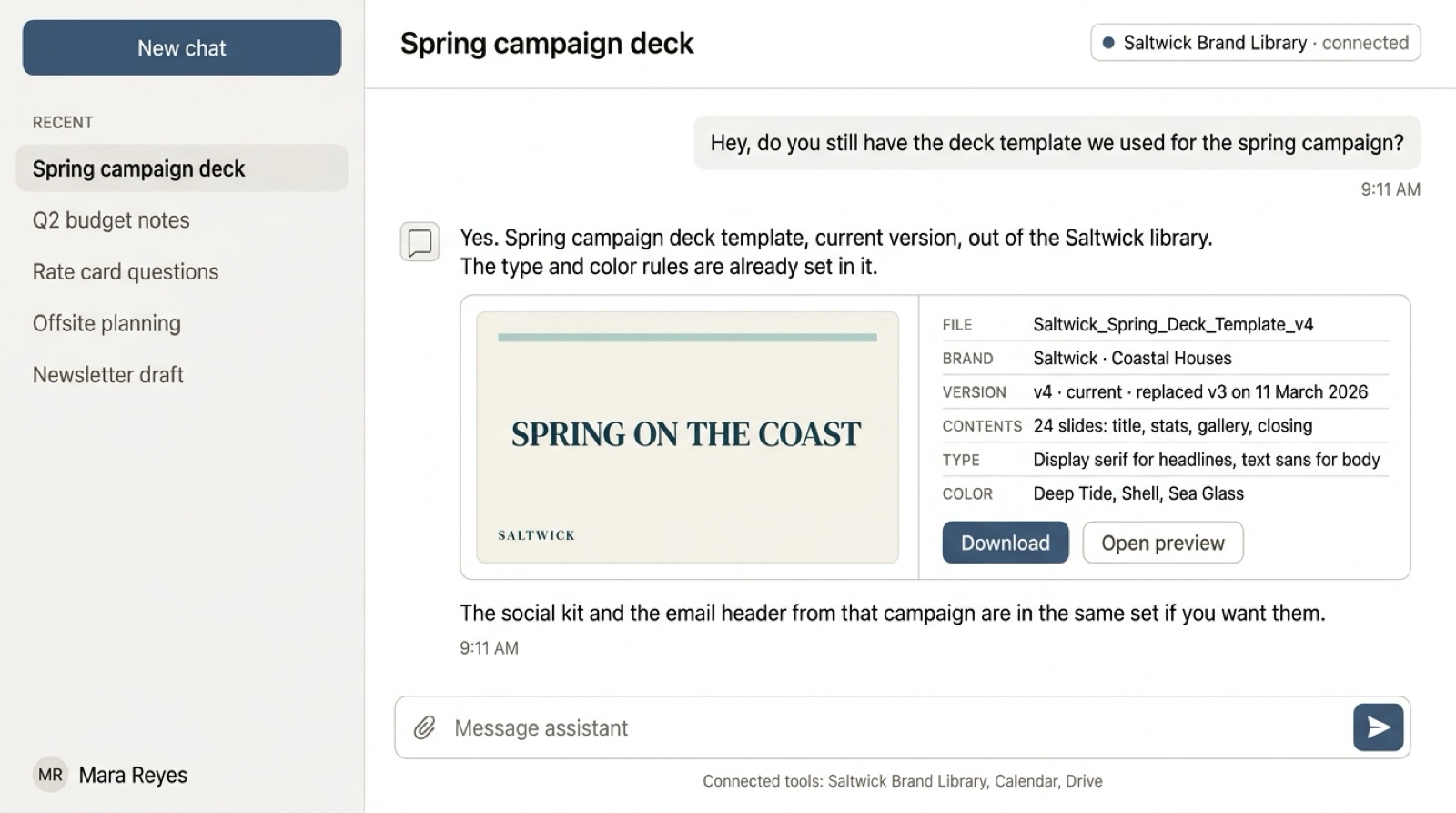
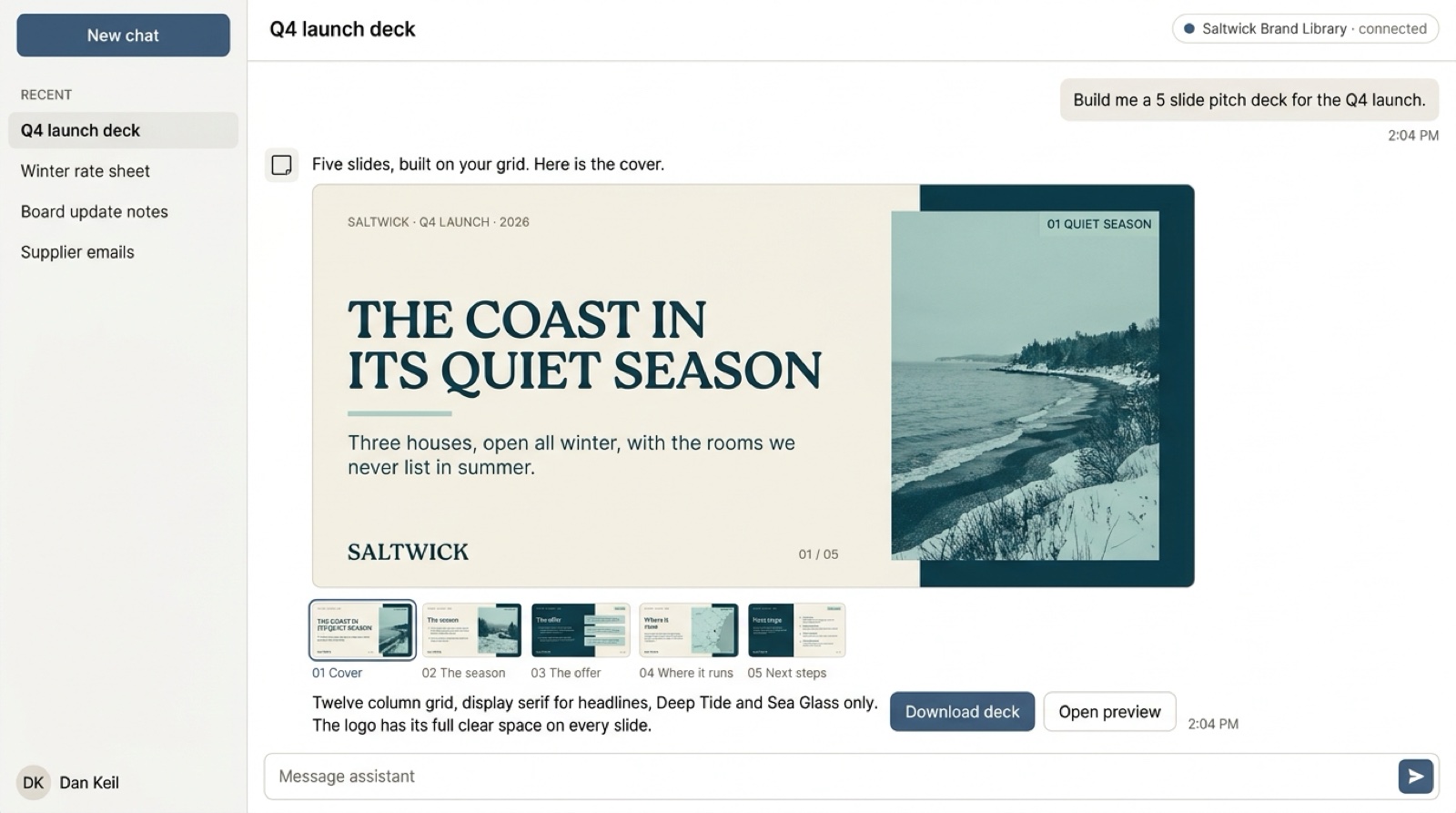
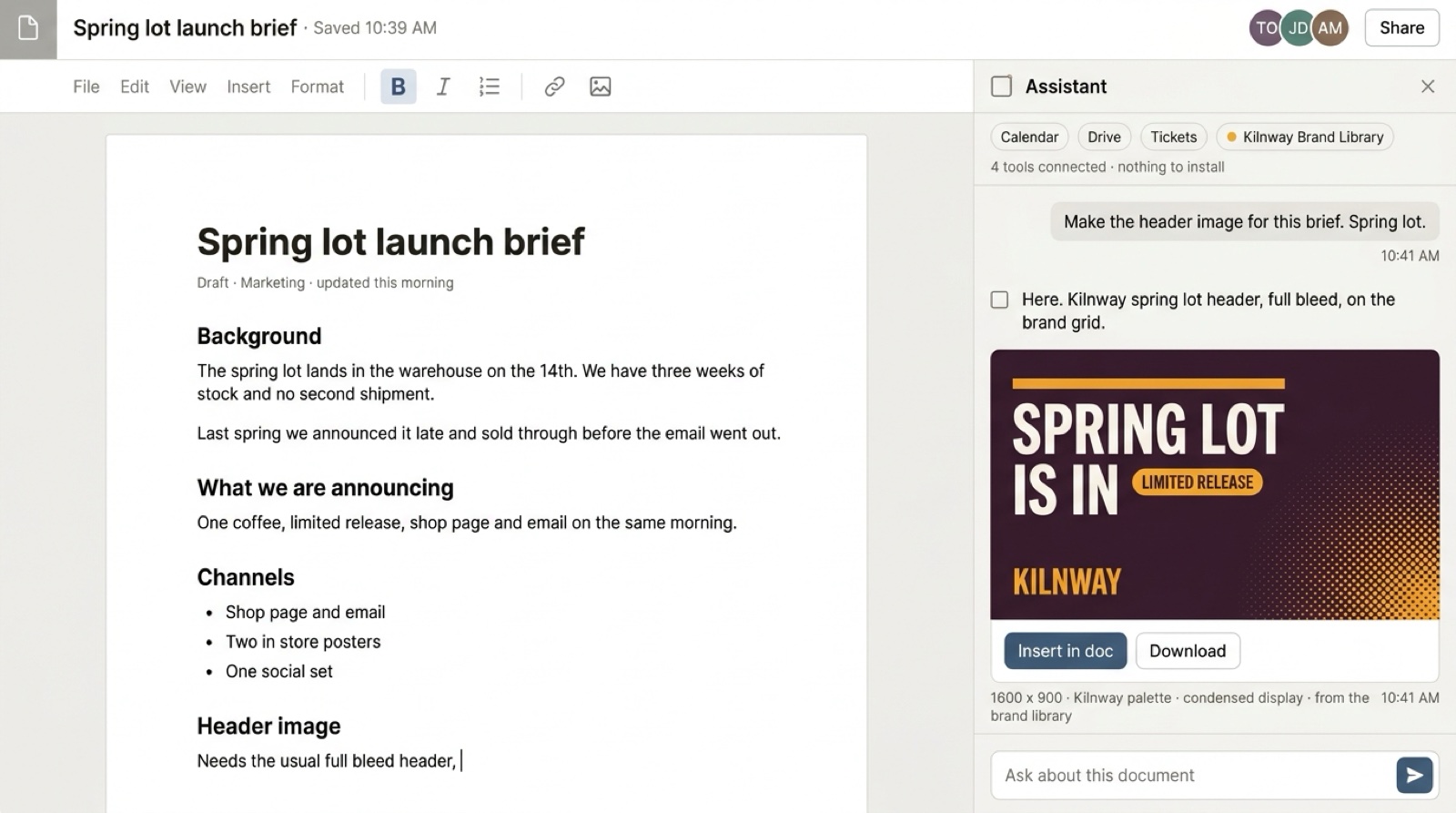
Then the part that makes it a design service instead of a filing cabinet: generation against the brand system. A client asks for a pitch deck, a slide, a comparison table. It comes back on her grid, in her typefaces, with her color rules applied, because the guidelines are loaded as constraints on the generation instead of sitting in a PDF somebody was supposed to read.
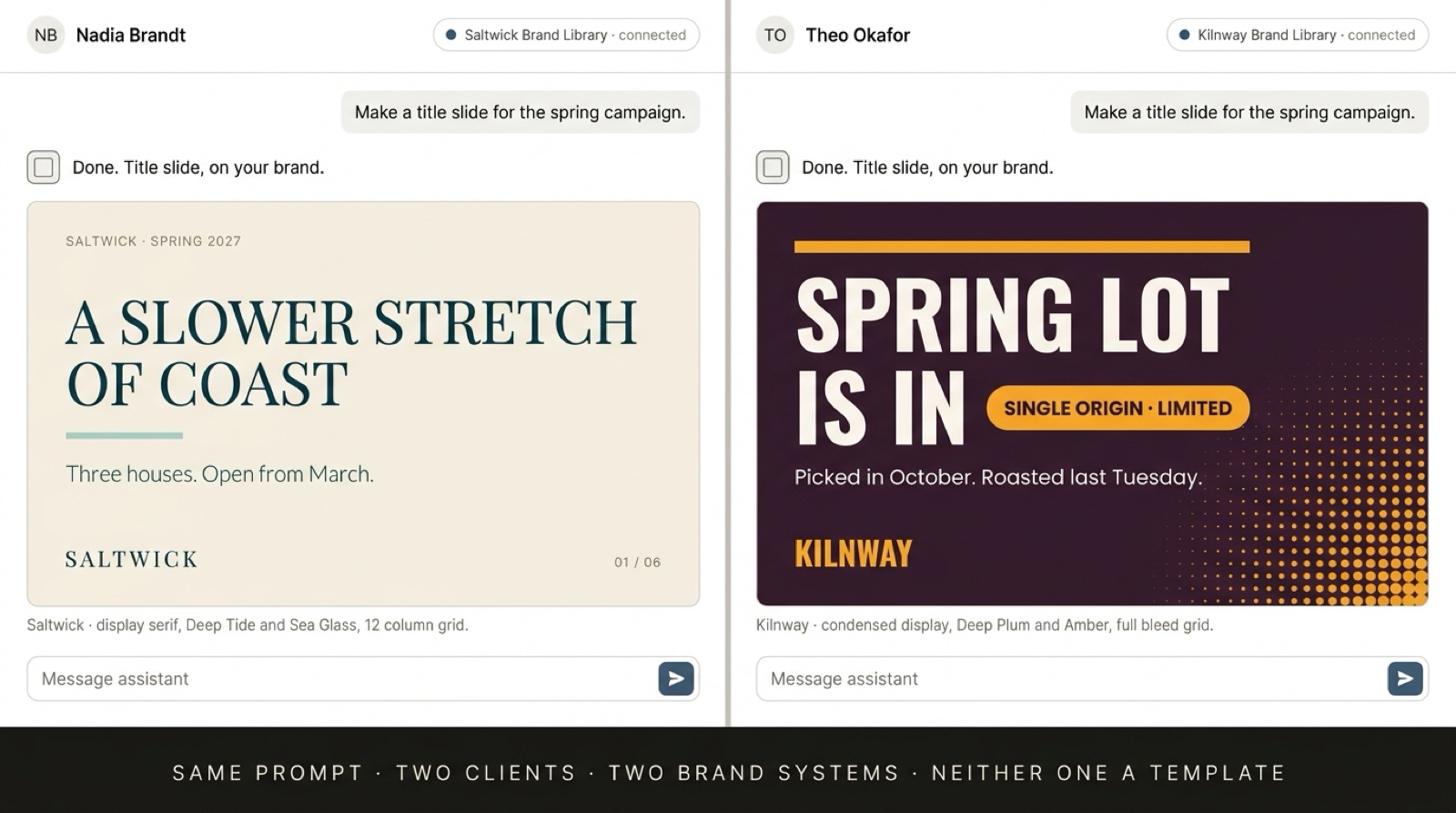
Each brand is scoped to its own client. The same sentence, typed by 2 different clients, produces 2 correctly different pieces of work.
Past clients got the same door, opened onto their own brand and nothing else. That is a permissions decision before it’s a technical one.
It shipped. It runs today.
The wobble
The part that could have sunk this was never the plumbing. Brand fidelity is the hard part, and it’s hard in a way that hides: an AI asked to make something “on brand” produces something plausible, and plausible is the failure mode. Wrong gets caught, because a wrong font is something a designer sees across a room. Plausible ships: the type scale is close, the logo has almost enough clear space, the secondary color is doing a job it isn’t allowed to do, and then it’s in market with her name behind it. So the generation doesn’t describe her brand to a model and hope. It builds from her real assets and her real templates, every rule that can be stated as a constraint stated as one, and her designers graded the output against what they’d have approved by hand before a single client touched it. That grading loop is where the build time went, and it’s where it goes every time.
After
The hunting stopped. Admin time spent tracking down assets went from just under 20 hours a week to an hour or two. Both ends of that are approximate, and we rounded each one the unflattering way.
What’s left is a studio where 12 designers do design. The requests that used to interrupt somebody’s afternoon close inside the client’s own chat window, and the admin staff stopped being the switchboard for a decade of finished projects.
The second change is the one she didn’t ask for. A finished project used to end: finals delivered, folder closed, relationship warm and idle. Now every brand she has ever built stays reachable inside the tool that client already uses, with her rules still attached. She isn’t the studio they used to use. She’s the design system they never left.
And when a current client ideates now, they ideate in her brand. What arrives Monday starts from her fonts and her grid, because that’s what the tool handed them.
Nobody at the studio opened a new app. Neither did the clients. There isn’t one.
What it required
She was in the weekly check-in herself, every week, because there was nobody in the building to send instead. That’s the shape of this work when the client has zero technical staff: one accountable partner on our side, the owner on theirs, nobody in between.
She had to give up the guidelines as they were. A brand book written for humans is mostly taste described in paragraphs, and a machine cannot follow taste. Her senior designers spent real hours converting it: the type scale, the clear space, which color is allowed to do which job, what a table looks like when it’s hers. We don’t get to write her brand.
She had to make the access call. Which past clients reach which assets, and for how long, is a business decision about a decade of relationships, and it landed on her desk in week 1. She made it herself, client by client.
And there was the conversation about the admin role. A job that is most of a week spent hunting files is not a job anyone defends, and it is still somebody’s week. She had that conversation herself, before we shipped. It wasn’t ours to have.
The last thing she gave up was the grievance. Her clients were never going to stop using ChatGPT.